Week 9: Training Load, Cardiorespiratory Fitness (VO₂max) and HRV
Untangling the relationship.

Hi there 👋
In today’s newsletter, we look at a recent study by Kaimusik et al, titled “Effects of seasonal training on physical fitness and heart rate variability in amateur Futsal players“, as I think there are some interesting pointers in the context of the relationship between training load, fitness, and resting physiology (heart rate and HRV).
In particular, in this study, resting autonomic data were collected using a Polar H10 chest strap. While optical sensors can work reasonably well at rest, chest straps such as the Polar H10 remain the most reliable solutions for capturing the precise timing between heartbeats required for HRV analysis (and the only way to actually assess your HRV, as opposed to your PRV, or pulse rate variability). The measurement protocol was aligned with what I recommend, i.e., measuring seated and while breathing naturally, self-paced, in the morning. This type of protocol is designed to minimize external influences on autonomic activity while amplifying the physiological response thanks to the orthostatic stressor, something we miss when measuring lying down (or sleeping). See also here for a broader discussion on this point.
The authors assessed resting heart rate and HRV at three time points: baseline, after a six-week pre-season period, and after a six-week in-season phase. At the same time, training load, VO2max, and resting physiology - among other parameters - were monitored. Needless to say, the structure of training differed substantially between the two phases, with much higher training loads during pre-season. During the in-season phase, total training stress was reduced as the focus shifted toward tactical preparation and competition.
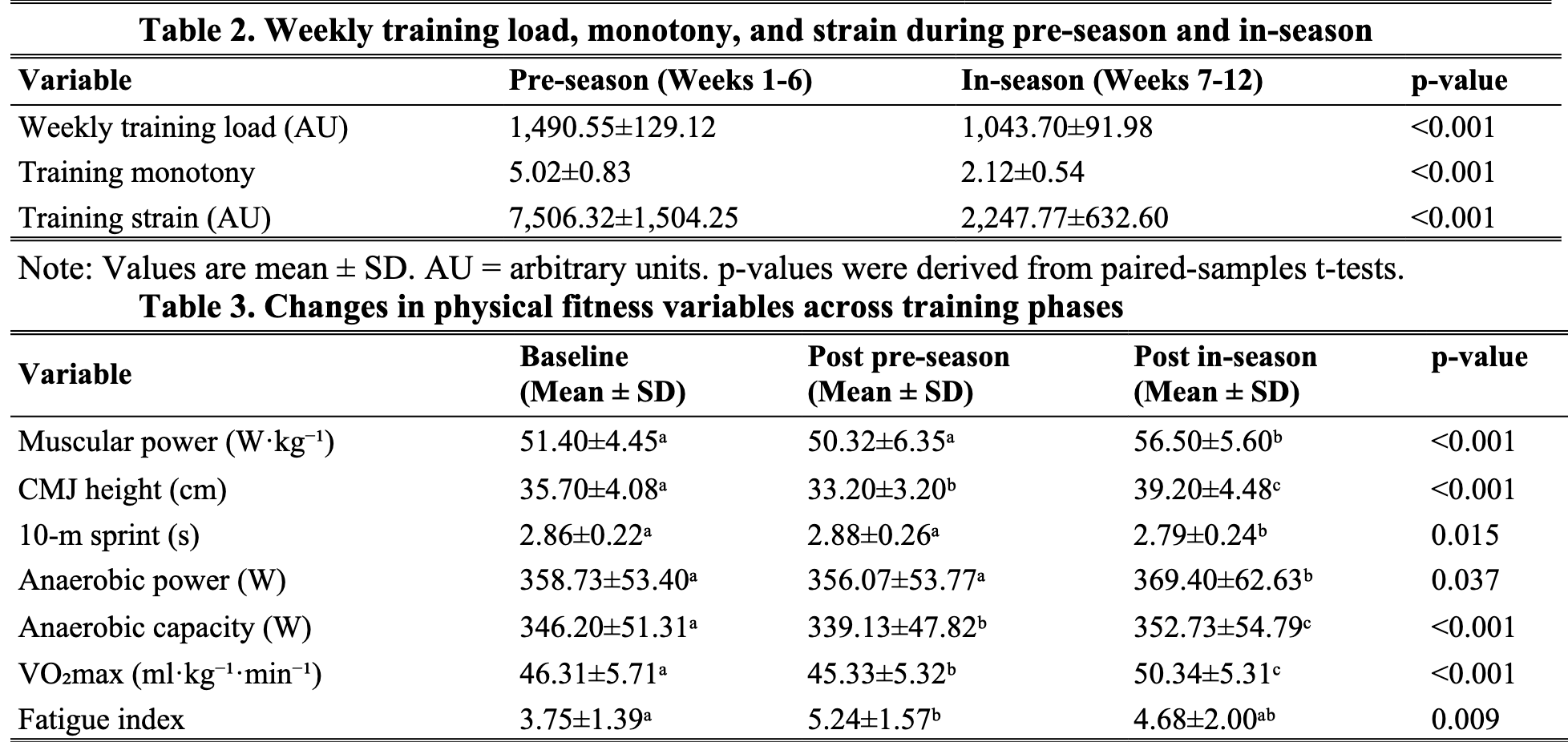
Looking at the physiological data, the pattern that emerges is quite consistent with how we typically interpret heart rate and HRV responses to training load. After the pre-season block, resting heart rate increased while RMSSD decreased relative to baseline. In other words, the autonomic system showed signs of increased physiological stress. At the same time, VO₂max and several performance indicators did not improve yet, and in some cases slightly declined. This is a common observation during periods of heavy training load. The body is under stress, fatigue accumulates, and performance capacity is temporarily suppressed, even though training adaptations may still be developing.
From a physiological perspective, this pattern reflects accumulated fatigue. HRV, particularly RMSSD, is very sensitive to these changes, and I would argue it is a more useful parameter in the context of tracking training load than tracking fitness. During periods of intensified training or when large changes are implemented (e.g., from the offseason to the preseason in team sports), we often observe reductions in RMSSD together with increases in resting heart rate. This is consistent with other studies from Flatt, Esco, and others that have done research in team settings.
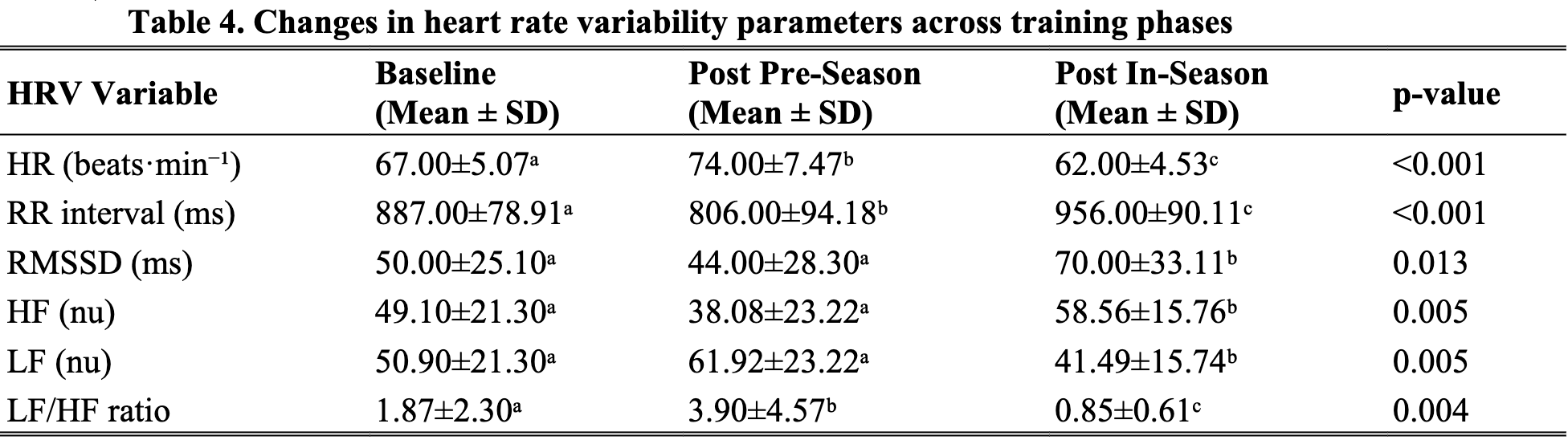
Later in the season, the picture changes. Training load reduces, allowing athletes to recover from the accumulated stress of the pre-season. At this stage, resting heart rate decreases, and RMSSD increases beyond baseline values, while physical fitness measures such as VO₂max improve. In other words, once fatigue is reduced, the adaptations induced during the high-load period become more apparent. Here is where I’d like to add some thoughts on the relationship between training load, fatigue, and fitness, which come to mind when interpreting HRV data.
In my experience, HRV is primarily a marker of how the body is responding to training load and stress. HRV tends to change quickly when training stress increases beyond our current capacity (it would otherwise be stable, the ideal response). For example, a heavy block of training coming from the offseason often produces reductions in RMSSD, as shown also in this study.
Heart rate, on the other hand, often reflects longer-term cardiovascular adaptations more directly. Endurance training for example leads to structural changes such as increased plasma volume, improved stroke volume, and cardiac remodeling. These adaptations reduce the heart rate required to maintain a given cardiac output, and as a result, resting heart rate often declines gradually as fitness improves.
Because of these changes, heart rate typically tracks improvements in fitness more consistently than HRV does. In my experience, it is unlikely for an elite endurance athlete to have a high resting heart rate, while it is not uncommon at all for them to have a relatively low or normal HRV in absolute terms. HRV is influenced strongly by autonomic regulation and therefore responds rapidly to stress, sleep quality, illness, psychological factors, and training load. These influences are valuable because they provide insight into recovery status and physiological stress. However, HRV is also impacted by heart rate, as a lower heart rate provides more room for variability. This is why I’ve argued, and I’d recommend always looking also at Normalized HRV, which we have added recently to HRV4Training Pro (I think that at times HRV alone doesn’t capture the change in parasympathetic activity as well as normalized HRV, i.e., if heart rate is suppressed, we expect HRV to increase, but if it doesn’t, then our “normal HRV” is in fact not responding as it probably should!).
Basically, HRV can change indirectly because of changes in heart rate, and not only because of changes in cardiac vagal activity. This is why I think HRV is best interpreted as a marker of training response rather than a direct predictor of performance improvements. When both signals are interpreted together, they provide a useful picture of the training process. It is a pity when papers report only HRV and “forget” about heart rate (was the change already explained by this simpler parameter?), but gladly in today’s study, both heart rate and HRV were reported.
HRV helps us understand whether the current training load is appropriate for the athlete and whether the body is coping well with that load. Resting heart rate, meanwhile, can provide a clearer link to longer-term cardiovascular adaptation, or at least, that’s my current thinking.
Get Coached
If you’d like to work with me 1-on-1 for your running goals in the year ahead and beyond, please apply here.
You can also learn more about my coaching, here.
Thank you and happy training!

HRV4Training Pro
HRV4Training Pro is the ultimate platform to help you analyze and interpret your physiological data, for individuals and teams.
You can find a guide and overview here.
Try HRV4Training Pro for free at HRVTraining.web.app
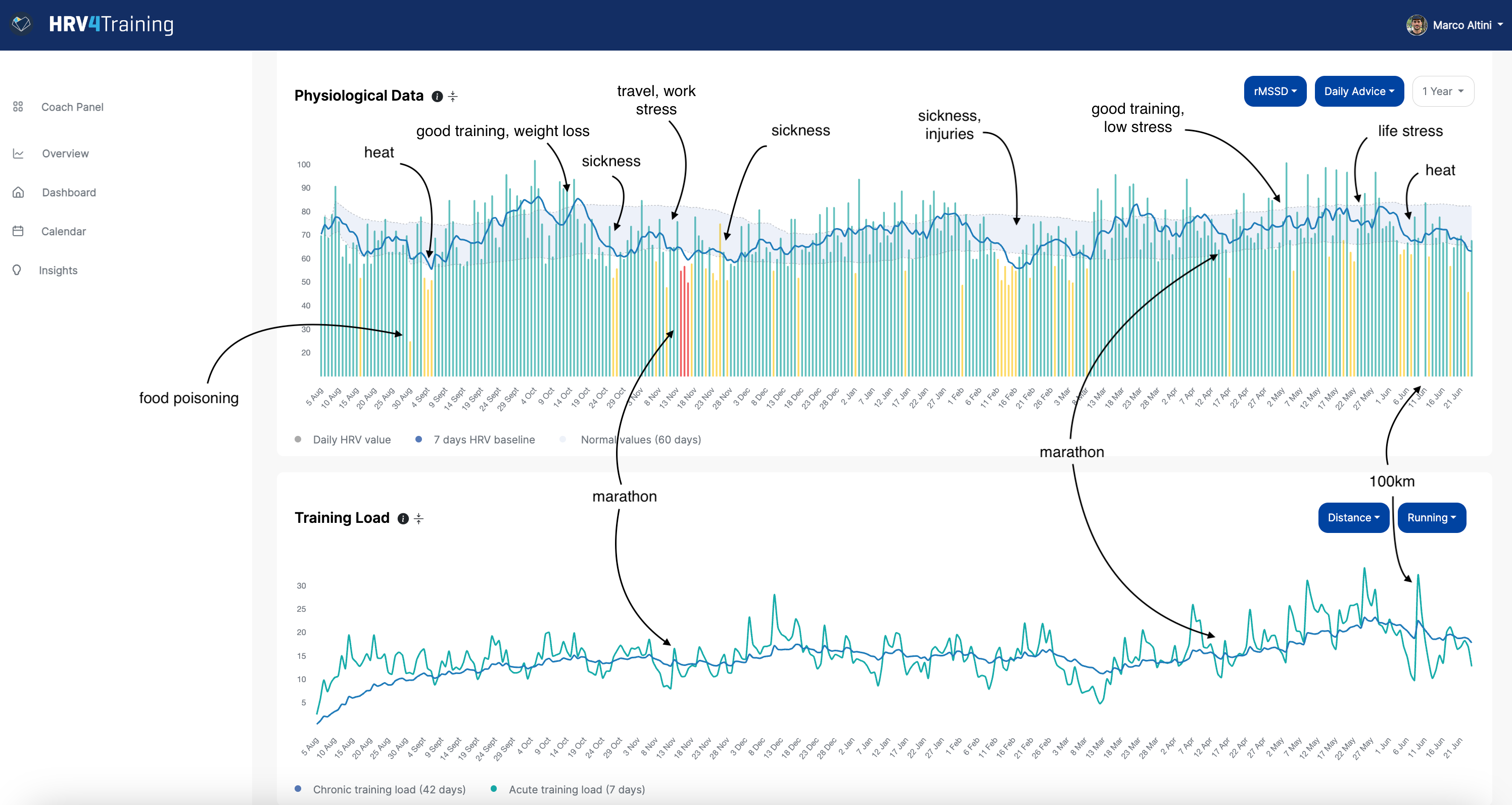
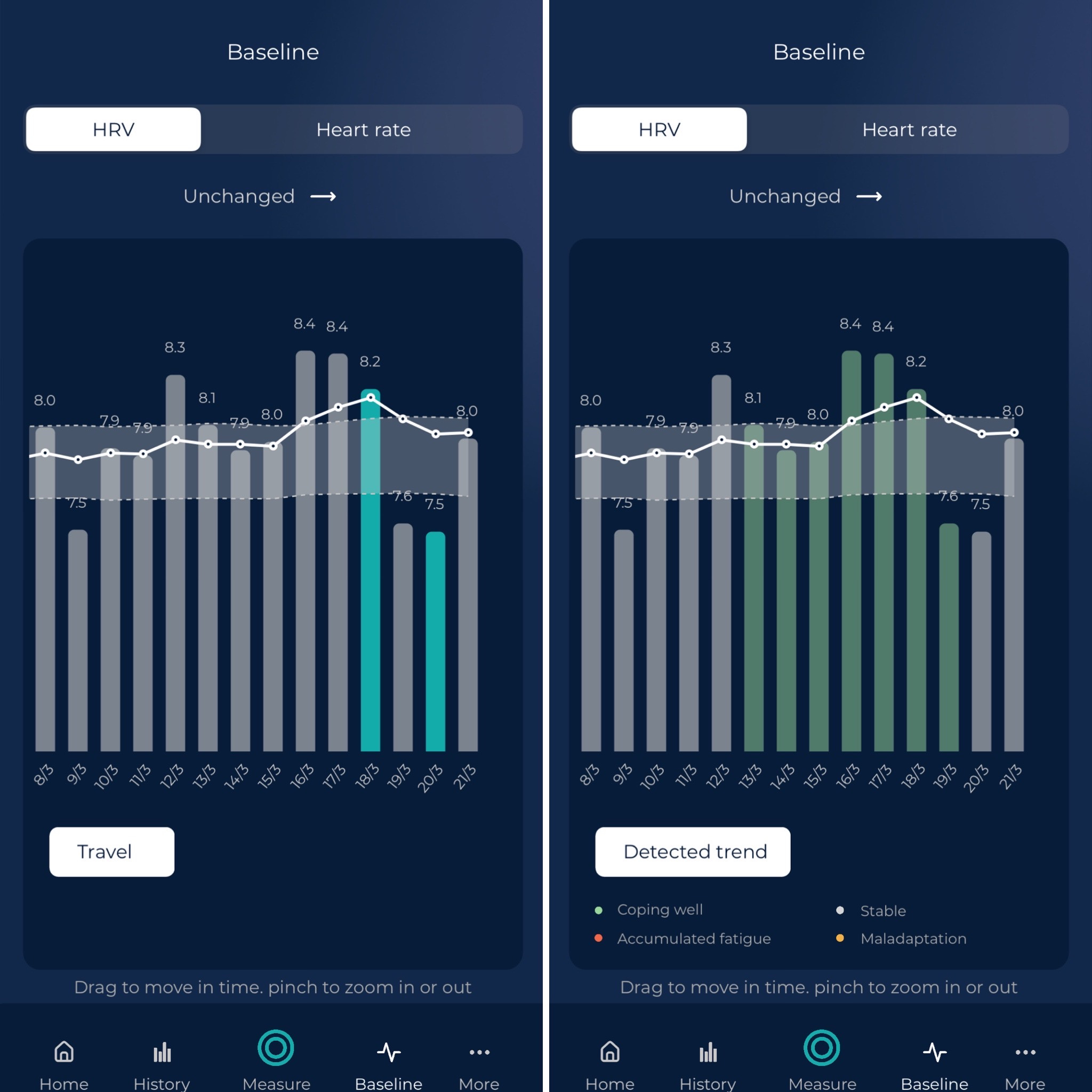
When using Pro, the app will also automatically recognize your account and add the Normal Range to the Baseline view, together with detected trends and additional annotations, which can help contextualizing longer-term changes.
You will also be able to pick rMSSD as the parameter to see on the homepage of the app.
Thank you again for your support and for allowing us to remain independent.
See you next week!

Marco holds a PhD cum laude in applied machine learning, a M.Sc. cum laude in computer science engineering, and a M.Sc. cum laude in human movement sciences and high-performance coaching. He is a certified Ultrarunning Coach.
Marco has published more than 50 papers and patents at the intersection between physiology, health, technology, and human performance.
He is co-founder of HRV4Training, Endurance Coach at Destination Unknown, advisor at Oura, guest lecturer at VU Amsterdam, and editor for IEEE Pervasive Computing Magazine. He loves running.
Social:
Personal Substack
Strava
Instagram